
How Do I Choose and Order Confidently at a Nearby Asian Restaurant?
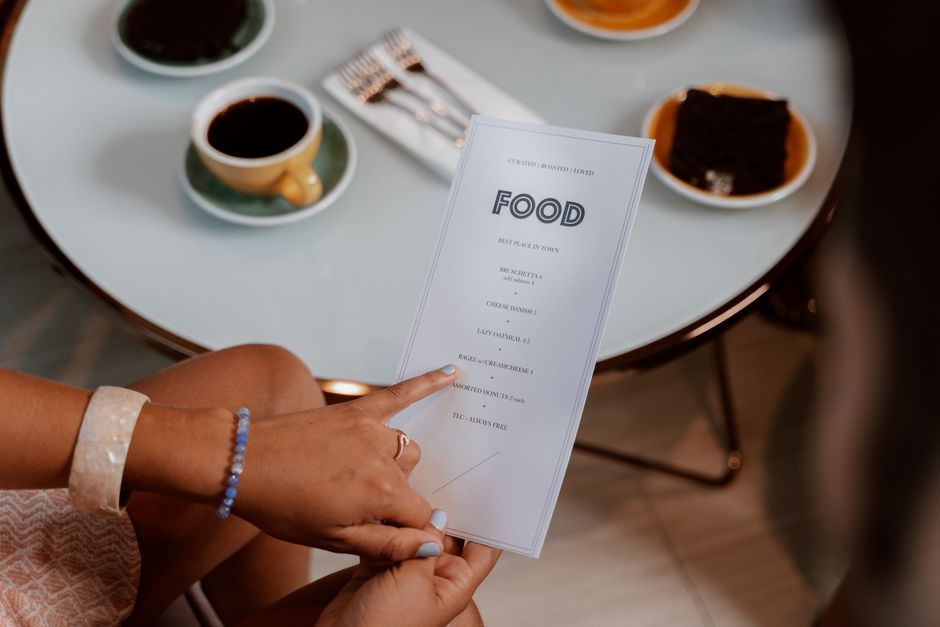
Choose confidently by treating the menu as evidence: identify the restaurant's regional focus from its dish names and descriptions, match the ordering format to your group and budget, read recent reviews for specific signals, and call ahead for dietary or allergy needs. Do not rely on a label alone; ask how a dish is made before you commit.
How can I tell what regional Asian cuisine a restaurant actually serves?
Read the menu for its repeated signals, not the broad word “Asian” in a listing. A restaurant tells you what it actually serves through its dish names, ingredient descriptions, cooking methods, meal formats, and any dedicated sections on the menu.
Run the menu evidence check. Open the current menu, scan the starters, mains, sauces, and specialty section, then ask one simple question: “What does this restaurant appear to do repeatedly?” A menu built around one set of recurring dishes and flavors gives you a clearer answer than a directory category ever will.
Next, assess fit before you order. Are you eating alone, splitting dishes, picking up food, or feeding a group? A family-style menu can suit a group because it gives everyone more than one option; a single-dish format may make a faster takeout order easier to manage. The right choice is the one that reduces uncertainty for your table, not the one with the most choices.
| What to check | What it tells you | Useful question |
|---|---|---|
| Repeated dish names and ingredients | The restaurant's likely culinary focus | “Which dishes best show what you specialize in?” |
| Descriptions and modifiers | Whether a dish matches your heat, protein, or dietary needs | “Can you explain how this is prepared?” |
| Ordering format | Whether dine-in, takeout, delivery, or sharing makes sense | “Which dishes travel well?” |
| Current availability | Whether your plan is still possible today | “Is this item available for pickup now?” |
That final question matters. The National Restaurant Association reported that 52% of consumers considered takeout essential to their lifestyle in 2024, while 77% of operators reported supply delays or shortages of key food or beverage items in 2023. The operational lesson is plain: a menu is a starting point, not a live inventory system. Confirm before placing a time-sensitive order.
Price belongs in this check too. Set a per-person ceiling before you browse, decide whether you are sharing, and look at the complete order rather than one appealing entree. That small pause keeps dining choices aligned with the same practical priorities used when you triage cash flow after a layoff: know the limit before the decision gets emotional.
What should I look for in reviews of an Asian restaurant?
Look for repeated, specific comments that help you predict your own order, not a star rating by itself. A review saying “good food” adds almost no decision value; a review naming a dish, explaining the ordering format, and describing whether the order arrived accurately gives you something you can test against the menu.
Use the three-signal review scan: dish detail, service detail, and format detail. First, note whether reviewers name items that appear on the current menu. Second, look for recurring comments about staff explanations, order accuracy, or responsiveness. Third, separate dine-in observations from takeout and delivery observations; a strong dining-room experience does not automatically answer whether food travels well.
- Weak signal: “Five stars, amazing.”
- Strong signal: “The reviewer identifies the dish, says how it was ordered, and describes what happened.”
- Weak signal: “They have options for everyone.”
- Strong signal: “The menu labels an option, and the reviewer reports whether staff answered ingredient questions clearly.”
Do not turn reviews into proof of ingredient safety. Reviews can help you create a short list and prepare questions, but they cannot confirm a kitchen's current ingredients, procedures, or availability. Put the restaurant itself in charge of those answers.
For takeout or delivery, check whether the review identifies the order channel and timing. The National Restaurant Association found that 88% of customers were satisfied with the variety of local takeout and delivery options, but variety creates comparison work. Reduce that cognitive load: compare restaurants on the same three points, then order from the one that answers your most important question clearly.
How do I find Asian restaurants with vegetarian or vegan options?
Find vegetarian or vegan options by looking for explicit menu language, icons, diet-specific sections, and stated modifications, then confirm ingredients and preparation with the restaurant. A label is a useful lead. It is not the finish line.
A peer-reviewed analysis of 6,419 menu items across 45 U.S. fast-casual and full-service chain restaurants found that 230 items, or 3.6%, were vegetarian and 631 items, or 9.8%, were gluten-free. The authors also counted menu wording, visual icons, diet-specific sections, and listed modifications. That is a practical search method: look for all four, then ask whether the modification changes ingredients, preparation, or both.
Use this script: “I need a vegetarian or vegan meal. Which dishes already meet that requirement, and which ones can be modified? For each option, what ingredients change and how is it prepared?” This is better than asking, “Do you have anything vegetarian?” The first version creates an answer you can evaluate; the second leaves the staff to guess what matters to you.
For gluten-free needs, be equally precise. The U.S. Food and Drug Administration sets a less-than-20-parts-per-million threshold for packaged foods carrying a gluten-free claim and says restaurant claims should be consistent with that definition. The FDA's restaurant questions are the right ones to lift: “What does gluten-free mean here? What ingredients are used? How is this item prepared?”
If the issue is an allergy rather than a preference, move the conversation off the menu and onto the kitchen process. FDA defines allergen cross-contact as the unintentional incorporation of a food allergen into food. Its research found that a full wash-rinse-sanitize-air-dry process was effective at removing allergens and minimizing transfer, while textured plastic was harder to clear than stainless steel or wood. Ask directly: “Will separate utensils and a separately cleaned preparation surface be used for my order?”
For a serious allergy, call ahead rather than trying to solve everything at the table. Food Allergy Research & Education recommends calling between 2 p.m. and 4 p.m. and speaking with a manager or chef. Ask about allergy training, a separate preparation area, separate cutting boards and utensils, access to ingredient labels, and who will be working when you plan to dine. Once you agree on a meal, repeat the ingredients, preparation, and garnish instructions when ordering.
Frequently Asked Questions
Which Asian dishes are good for someone trying a cuisine for the first time?
Start with a dish whose ingredients and preparation the menu explains clearly, then ask the staff which option best represents the restaurant's focus. For a shared meal, order one familiar-looking option and one house specialty, provided the staff can explain the ingredients and preparation. The goal is not to choose a universally "safe" dish; it is to make an informed choice at that specific restaurant.
How can I check whether a nearby restaurant handles food allergies?
Call ahead and ask to speak with a manager or chef, preferably between 2 p.m. and 4 p.m. according to FARE. State every allergen, then ask about staff training, separate preparation space, utensils, ingredient labels, and the person who will be on duty. At the restaurant, repeat the information and confirm the final dish, including garnishes.
Should I order dishes that are listed as house specialties?
Yes, when the specialty fits your dietary needs and the restaurant can explain what it contains and how it is prepared. A house-specialty label is a useful prompt, not a guarantee of suitability or availability. Confirm current availability directly, especially for takeout or delivery orders.
Your drill for this week: before your next restaurant order, write down one cuisine-fit question, one menu-fit question, and one preparation question. Ask all three. A confident order is not a lucky guess; it is a short, clear research process.
Sources
- U.S. Food and Drug Administration: “Gluten-Free” Means What It Says
- U.S. Food and Drug Administration: Allergen Removal and Transfer Using Wiping and Cleaning Methods
- Public Health Nutrition: Menu Items Targeted to Dietary Restrictions
- Food Allergy Research & Education: Calling Restaurants
- National Restaurant Association: 2024 Restaurant Industry Sales Forecast