
How Do I Build an Industrial Refrigeration Preventive-Maintenance Program?
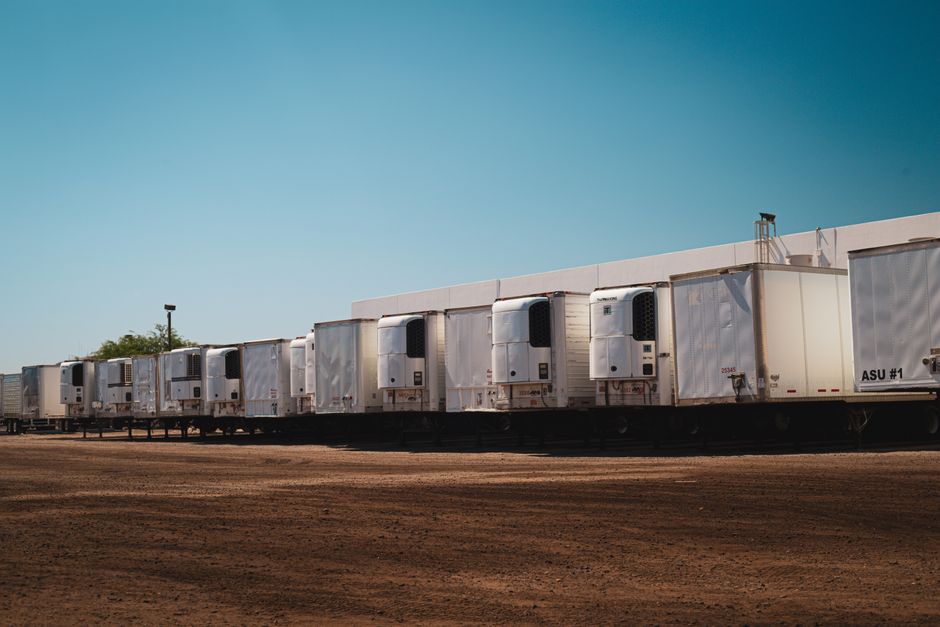
Build the program around a written component register, operating logs, scheduled inspections, sensor and safety-device tests, documented contractor work, and a defined response to abnormal readings. Set frequencies from manufacturer instructions and recognized engineering practice, then use daily operating data to escalate work when head pressure, vibration, ice, leaks, or energy use depart from the system's normal seasonal condition.
The puzzle is straightforward: refrigeration failures often announce themselves in ordinary operating data long before they become a shutdown. The useful distinction is not between maintenance and repair; it is between a system that records deviations early and one that discovers them when production is already exposed.
What should be included in an industrial refrigeration preventive-maintenance checklist?
An industrial refrigeration preventive-maintenance checklist should connect every critical component to an inspection task, an interval, an operating limit, a responsible person, and a record. A calendar without operating evidence becomes a ritual; a log without assigned follow-up becomes a diary.
Start with the equipment inventory: compressors and their drives, condensers, evaporators, vessels and heat exchangers, pumps, piping, valves, oil systems, controls, sensors, alarms, interlocks, relief and vent systems, and emergency shutdown equipment. OSHA's Process Safety Management standard identifies pressure vessels, piping and valves, relief and vent systems, emergency shutdown systems, controls including sensors, alarms and interlocks, and pumps as mechanical-integrity equipment. That list is a useful boundary: if a failed item can affect containment, control, or safe shutdown, it belongs in the program.
For ammonia operations, the checklist must also state operating ranges for temperature, pressure, level, and flow; the consequences of exceeding those ranges; alarm and control set points; and safety-device settings. OSHA's guidance on ammonia storage vessels also identifies weekly tasks drawn from IIAR Bulletin 110: inspect level gauges for oil buildup, drain oil where applicable, inspect the vessel and insulation, purge non-condensable gases, and verify that draining and venting plugs, caps, and blind flanges are closed.
| Program element | What to document | Why it matters |
|---|---|---|
| Operating log | Pressures, temperatures, oil condition, levels, flow where applicable, vibration observations, and alarms | Creates the baseline needed to identify a deviation. |
| Component tasks | Equipment identifier, task, interval, responsible role, acceptance condition, and corrective-work reference | Prevents important equipment from disappearing into a generic work order. |
| Safety testing | Protection device tested, set point or result, tester, date, and follow-up action | Shows that protective layers were tested rather than assumed. |
| Contractor handoff | Scope, readings before and after work, parts changed, tests performed, open risks, and return-to-service status | Preserves operational knowledge across shifts and vendors. |
The EECA Good Practice Guide: Industrial Refrigeration adds the practical layer: inspect coils for dirt or debris, inspect joints, seals, valves, and glands for leaks, repair vibrating pipework, check oil levels, keep product from blocking evaporator airflow, and check defrost and drain-pan operation. These are not disconnected chores. They preserve heat transfer, airflow, containment, and mechanical stability: the conditions on which efficient refrigeration depends.
How often should industrial refrigeration compressors, condensers, and sensors be serviced?
Industrial refrigeration equipment should be serviced at frequencies set by the manufacturer and recognized engineering practice, supplemented by more frequent inspection when operating history shows a need. IIAR Bulletin 110 recommends observing the system in normal operation and taking a full operating-condition log preferably every four hours, but at least daily; it also calls for a compressor-drive mechanical inspection at least every three months and yearly testing of specified cutouts and protection devices.
That produces a defensible maintenance cadence. Operators should collect normal-operation readings daily or more often, then compare them with seasonal design conditions and safe limits. The comparison matters because a summer condensing condition is not automatically a fault, while a value that is abnormal for the same season is evidence worth investigating.
| Interval | Focus | Source basis |
|---|---|---|
| Preferably every four hours; at least daily | Full operating-condition log and comparison with normal seasonal conditions and safe limits | IIAR Bulletin 110 |
| Weekly | Applicable vessel checks, oil buildup, vessel and insulation appearance, non-condensables, and closure of plugs, caps, and blind flanges | OSHA ammonia vessel guidance citing IIAR Bulletin 110 |
| At least every three months | Mechanical condition of compressor drives, including belt condition and tension where fitted | IIAR Bulletin 110 |
| At least every 12 months | Cutouts and protection devices; external vessel, heat-exchanger, and insulation inspection | IIAR Bulletin 110 |
| At least every five years | Independent pressure-vessel and shell-and-tube heat-exchanger inspection | IIAR Bulletin 110 |
Sensor work deserves unusual discipline because a bad measurement can make a healthy machine look faulty or let a faulty control decision persist. EECA advises checking temperature-controller settings and the calibration and location of temperature sensors when product temperature is already low but the plant continues running after the target has been reached. Record the as-found reading, the action taken, and the as-left condition; otherwise calibration provides no auditable evidence.
Where formal education is part of developing a technical career path, professionals may also need to plan funding and applications separately from site qualifications; Job Zesty's guide to Erasmus Mundus Joint Master scholarships addresses that distinct planning problem. It does not replace equipment-specific training, written procedures, or manufacturer instructions.
Why has my refrigeration system's energy consumption suddenly increased?
A sudden increase in refrigeration energy consumption usually means the system is doing more compression or heat-transfer work to achieve the same cooling result, so the investigation should begin with head pressure, heat-transfer surfaces, airflow, controls, refrigerant condition, and pressure drops. EECA identifies dirty or blocked condensers, non-condensable gases, incorrect controls, refrigerant overcharge, excessive pressure drops, and poor heat transfer as causes of high head pressure and lost efficiency.
High head pressure is therefore not merely a number to suppress. It is a question: what has made heat rejection harder? Inspect condenser cleanliness and airflow, then check for non-condensable gases and control errors under the facility's procedure. EECA estimates that reducing condensing temperature and discharge pressure can save 2% to 3% energy for each 1 degree C reduction; it gives similar 2% to 3% potential for each 1 degree C increase in evaporation temperature and suction pressure. Those figures explain why small departures in operating condition deserve attention.
Ice buildup requires the same causal approach. Check evaporator airflow, product placement, defrost operation, and drain-pan operation before treating ice as a cosmetic issue. Unusual vibration points toward a mechanical condition or pipework problem; EECA specifically includes repairing vibrating pipework in its maintenance checklist. A leak inspection belongs in the same workflow because joints, seals, valves, and glands are all named inspection points in the guide.
Do not let an energy spike become an isolated utility problem. Cross-reference it with the operating log, recent maintenance, alarm history, ambient or seasonal condition, and production changes. Then assign a corrective action with a close-out reading. The purpose is not to create more paperwork. It is to distinguish a transient operating change from an emerging failure mechanism.
How do you turn maintenance data into fewer shutdowns and safer handoffs?
Turn data into reliability by giving every abnormal condition a route from observation to decision: log the reading, compare it with the operating envelope, identify the component, assign work, verify the correction, and retain the record. The last step is regulatory as well as practical. OSHA states, “The employer shall document each inspection and test that has been performed on process equipment.” Each record must identify the date, performer, equipment identifier, inspection or test performed, and results.
Use fixed preventive tasks for known degradation and legally or technically required testing. Use condition trends to change priority when the equipment supplies evidence: rising head pressure, worsening vibration, repeat defrost problems, or a widening gap between expected and actual energy use. This is predictive maintenance in its useful form, not a separate software purchase.
For ammonia systems containing 10,000 pounds or more, OSHA states that the Process Safety Management standard applies. Keep process-safety information available with the maintenance program, including P&IDs, relief-system design basis, ventilation-system design, design codes and standards, and information about interlocks, detection, and suppression systems. Before returning an opened system section to service, OSHA's ammonia guidance is explicit: pressure-test it before evacuation.
The program's final test is simple: can the next shift explain what changed, why it changed, what protection was tested, and what remains unresolved? If not, the plant has maintenance activity, but not yet a reliable preventive-maintenance program.
Frequently Asked Questions
Which refrigeration maintenance tasks can facility staff perform and which need a specialist?
Facility staff can perform assigned routine observations and housekeeping tasks under written procedures: log operating conditions, look for dirt or debris on coils, confirm airflow is not blocked, inspect visible conditions, and report abnormal readings. Work that opens the refrigeration circuit, tests pressure-containing equipment or protective devices, changes controls, or requires specialized technical judgment should be assigned to qualified personnel following manufacturer instructions and the facility's procedures. OSHA states that any portion of an ammonia system opened for maintenance must be pressure-tested before evacuation.
Should I use predictive maintenance or a fixed preventive-maintenance schedule?
Use both. A fixed schedule supplies the minimum discipline for required inspections, safety-device testing, and recurring mechanical tasks; predictive maintenance uses trends in operating logs to bring work forward when conditions deteriorate. IIAR Bulletin 110 supports regular operating-condition logs, while OSHA requires inspection and test frequencies to follow manufacturer recommendations and recognized engineering practice, with more frequent inspection when operating experience warrants it.
What records do I need to maintain an ammonia refrigeration system safely?
Maintain operating logs, equipment identifiers, written operating limits and set points, inspection and test records, maintenance procedures, and documentation needed to understand the system's process-safety design. OSHA specifies that each inspection and test record must show the date, performer, equipment identifier, work performed, and results. Required process-safety information includes items such as P&IDs, relief-system design basis, ventilation-system design, applicable design codes, and safety systems.
Sources
- Occupational Safety and Health Administration: Process Safety Management, 29 CFR 1910.119
- Occupational Safety and Health Administration: Storage of Ammonia in Vessels
- International Institute of Ammonia Refrigeration: Bulletin 110
- Energy Efficiency and Conservation Authority: Good Practice Guide: Industrial Refrigeration
- Occupational Safety and Health Administration: Ammonia Refrigeration Standards