
How Can I Exercise Safely With Dizziness or a Vestibular Condition?
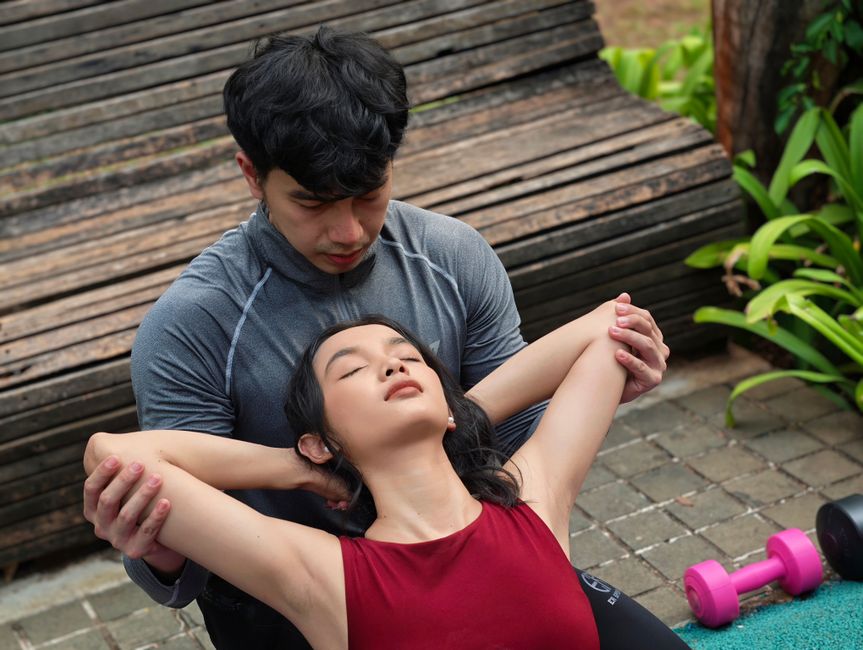
Exercise can be appropriate with dizziness or a vestibular condition, but the safe choice is a gradual, supported routine matched to the cause of symptoms and current fall risk. Start with low-risk movement in a controlled setting, monitor whether symptoms settle promptly, and use diagnosis-specific vestibular rehabilitation only when it has been prescribed after assessment.
Is it safe to exercise when I have dizziness or vertigo?
It can be safe, but “exercise” is too broad to be a plan. A steady indoor walk and an unsupervised class with fast turns create very different stakes when balance is unreliable.
The first split is simple: general fitness builds capacity; vestibular rehabilitation targets a diagnosed vestibular problem. The American Physical Therapy Association’s 2022 clinical practice guideline found strong evidence that vestibular physical therapy improves symptoms, gaze stability, postural stability, and function for people with objectively diagnosed unilateral or bilateral peripheral vestibular hypofunction. Its conclusion does not automatically apply to unexplained dizziness or central vestibular disorders.
That distinction saves time and reduces avoidable risk. The Vestibular Disorders Association says a comprehensive clinical examination is needed before a vestibular rehabilitation program is designed, because the exercises are customized to the identified problem. In other words: do not treat a generic fitness video as a diagnosis.
Make the environment carry some of the safety load. The NHS advises sitting down immediately when dizziness starts, moving the head carefully and slowly, using lights when getting up at night, and using a walking stick when there is a risk of falling. Clear the route, choose stable footwear, and keep a fixed support nearby before starting movement. This is the same practical logic used in planning a safe solo shift: reduce predictable hazards before the difficult moment arrives.
Why does exercise make my dizziness worse?
Exercise can worsen dizziness because movement challenges systems that already disagree about where the body is in space. The Vestibular Disorders Association explains that balance relies on visual, vestibular, and somatosensory input, along with muscle strength and joint mobility. Fast head turns, visually busy rooms, uneven ground, darkness, and fatigue can raise the cognitive load on those systems.
That does not mean every symptom increase is a failure. Mersey Care NHS Foundation Trust explains that some dizziness, vertigo, or imbalance can be normal when movement resumes, provided the challenge is progressed safely. Its guide uses a practical pacing rule: keep provoked symptoms at no more than 5 out of 10 and expect them to settle within five minutes; if they do not, reduce the movement duration.
The useful replacement for “push through it” is the settle test: choose one manageable movement, do it where support is available, then observe whether symptoms calm down as expected. If the response is disproportionate or lingers, the next session needs less duration, less speed, less visual complexity, or clinical input. More effort is not automatically more rehabilitation.
There is also a diagnosis problem. The 2016 Cochrane review of structured vestibular rehabilitation found improved dizziness frequency for symptomatic unilateral peripheral vestibular dysfunction, but it also found that repositioning maneuvers had better short-term results for benign paroxysmal positional vertigo. Same headline symptom. Different treatment job.
Which workouts are safest for people with vestibular problems?
The safest workout is the one that matches the person’s diagnosis, symptom pattern, and fall risk while keeping the challenge controllable. Walking, supported strength work, stationary cycling, stretching, and carefully selected classes can all be options; none is universally safe by label alone.
| Activity | Lower-risk starting version | What raises the risk |
|---|---|---|
| Walking | Use a predictable indoor route, stable support if needed, and a pace that allows symptoms to settle. | Uneven ground, darkness, crowded paths, and rapid head turns. |
| Cycling | Use a stationary cycle and keep head position steady while learning the response. | Outdoor traffic, moving visual scenery, mounting or dismounting while symptomatic. |
| Strength training | Use stable positions and fixed support; prioritize controlled repetitions over unstable surfaces. | Quick transitions from floor to standing, unsupported single-leg work, and holding the breath during effort. |
| Classes | Choose a format that permits slower transitions, a place near support, and an easy exit. | Fast choreography, jumping, spinning, dim lighting, and pressure to match the room’s pace. |
Mersey Care NHS Foundation Trust recommends beginning walking with 5 to 10 minutes and building gradually toward 30 minutes daily, initially indoors when needed; walking aids or poles can provide support. That is a useful progression model for general fitness: change one variable at a time. Add duration before speed. Add speed before complexity. Add complexity before an unpredictable environment.
For prescribed vestibular rehabilitation, the 2022 American Physical Therapy Association guideline gives clinicians specific home-exercise parameters for chronic unilateral vestibular hypofunction, including gaze-stabilization work and balance exercise. Those figures belong inside clinician-directed care, not a self-built plan. The same guideline specifically says voluntary saccadic or smooth-pursuit eye movements without head movement should not be used alone to improve gaze stability because harms outweigh benefits.
Build a safer exercise plan
Use this sequence: identify the diagnosis or get assessed if dizziness is recurring or affecting daily life; choose a stable setting; select one low-risk activity; record the trigger and recovery; then adjust only one variable for the next session. That record gives a clinician better information than a vague report that exercise “felt bad.”
Do not wait out red flags. The NHS advises emergency assessment for vertigo with double vision or vision loss, hearing loss, trouble speaking, or arm or leg weakness, numbness, or tingling. Mersey Care also lists sudden severe headache, facial droop, swallowing problems, loss of consciousness, and sudden severe hearing loss as urgent warning signs. The next useful drill is simple: before the next session, name the support you will use, the symptom level that ends the session, and the person or service to contact if warning signs appear.
Frequently Asked Questions
Should vestibular exercises make me feel dizzy?
Some mild to moderate symptom provocation can be part of habituation work, because the exercise repeatedly exposes a person to a known trigger. That is not a reason to improvise a program: the Vestibular Disorders Association says vestibular rehabilitation should follow a comprehensive clinical examination, and Mersey Care advises reducing the duration when symptoms do not settle promptly.
When should I stop exercising because of dizziness?
Stop the activity when symptoms become severe, remain elevated rather than settling, or make a fall more likely. Emergency assessment is warranted when vertigo occurs with double vision or vision loss, trouble speaking, weakness, numbness or tingling, or sudden severe hearing loss, according to the NHS and Mersey Care NHS Foundation Trust.
Can I do strength training if I have a balance disorder?
Strength training can be part of a fall-prevention approach, but the exercise setup and the cause of the balance disorder change the risk. The Vestibular Disorders Association includes strength training among general exercise strategies that can support fall prevention, while emphasizing that balance depends on several systems and that individualized planning matters.
Sources
- American Physical Therapy Association: 2022 Clinical Practice Guideline for Peripheral Vestibular Hypofunction
- Cochrane Review abridged in the European Journal of Physical and Rehabilitation Medicine
- NHS: Vertigo
- Mersey Care NHS Foundation Trust: Dizziness, Vertigo and Imbalance
- Vestibular Disorders Association: Vestibular Rehabilitation Therapy
- Vestibular Disorders Association: Fall Prevention
Disclaimer: This article is for general information only and is not medical advice. It is not a substitute for diagnosis or treatment by a qualified healthcare professional. Always speak to your doctor before acting on anything you read here.