
How Can Beginners Use a Balance Board for Stronger, More Stable Ankles?
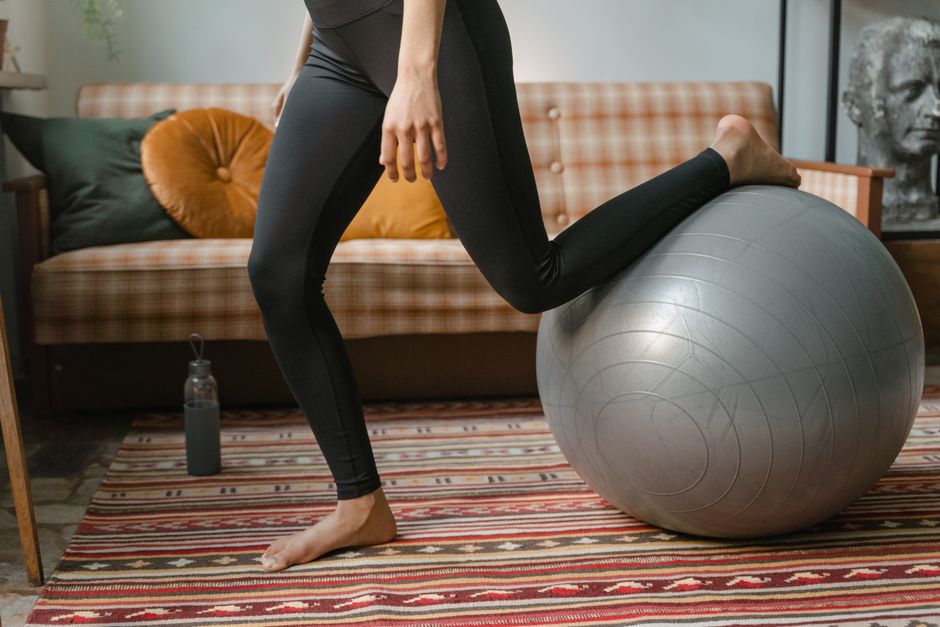
Beginners can use a balance board to train ankle control by starting with stable, supported standing and increasing difficulty only when the current drill is controlled and pain-free. Balance-board work improves proprioception and dynamic stability; it does not replace ankle-strength work, a gradual return after injury, or medical assessment when weight bearing is difficult or symptoms persist.
Do balance boards actually make your ankles stronger?
Balance boards build ankle stability mostly by training control, not by acting like a direct strength exercise. The board moves underfoot, so the nervous system has to register position and adjust quickly. That is proprioception: the body’s sense of where a joint is and how it is moving. Balance is the visible result. Strength is the muscle capacity that helps you create and hold those corrections.
Keep those jobs separate. A weak plan says, “Stand on the board and everything gets stronger.” A stronger plan says, “Use the board for control; use strengthening and stable single-leg work for capacity.” The 2021 Clinical Rehabilitation systematic review found that balance training improved function, perceived instability, and dynamic-balance outcomes for people with chronic ankle instability. It also found that balance training was not a universal replacement for strength training.
Floor work belongs in the same program. The American Academy of Orthopaedic Surgeons explains that strengthening the muscles supporting the lower leg, foot, and ankle helps keep the ankle joint stable. Its basic single-leg balance drill uses a stable chair or countertop for support. That support is not a shortcut. It is the setup that lets a beginner practice good corrections instead of rehearsing a near-fall.
How long should I use a balance board each day?
There is no single daily balance-board dose that fits every beginner. Use the research as a guardrail, not a copy-and-paste prescription: the 2009 BMJ trial used a progressive home proprioceptive program with three sessions per week, each lasting up to 30 minutes, across eight weeks after athletes had returned to sports participation. The 2004 American Journal of Sports Medicine volleyball program used roughly five minutes of ankle-focused work during each warm-up and progressed across a 36-week season.
The useful pattern is consistency plus progression, not maximum wobble. Start with a small, repeatable practice block that ends while control is still sharp. Then reassess: did the board stay under control, did the ankle feel normal during the session, and did it remain comfortable afterward? AAOS says to stop and consult a doctor or physical therapist when an exercise causes pain or does not feel right.
| Stage | Board or surface | Support and task | Progress signal |
|---|---|---|---|
| Foundation | Floor or rocker board | Two feet, hands near a stable chair or countertop; hold the board level or shift weight slowly. | The board moves quietly and predictably. |
| Control | Rocker board or wobble board | Two feet with lighter hand contact; guide the board through a small range without striking its edges. | You can correct movement without gripping or rushing. |
| Single-leg skill | Floor first, then board if appropriate | One foot with support available; keep the task brief and controlled. | You can hold alignment without pain or repeated loss of balance. |
| Sport preparation | Board only as one option | Add sport-relevant movement only after safe jumping and landing are tolerated. | The next challenge matches your sport and current rehabilitation stage. |
Choose equipment for the skill gap. A rocker board usually limits movement to one direction, which makes it easier to learn controlled forward-backward or side-to-side shifts. A wobble board can move in multiple directions and raises the coordination demand. A BOSU trainer provides another unstable surface, but it is not required: a floor-based single-leg drill can be the right first rep. The tool matters less than a clean progression.
Use a “support-first” rule. Weak setup: “Step on, let go, and see what happens.” Strong setup: “Place the board beside a stable support, start with two feet, and reduce hand contact only after control improves.” This is the same repeatable-checklist mindset used in a preventive-maintenance program: the routine reduces avoidable setup mistakes before the higher-stakes task begins.
Can a wobble board help prevent ankle sprains?
Yes, wobble-board and broader proprioceptive training can help reduce recurrent ankle sprains, especially as part of a structured program rather than as a stand-alone promise. In the 2009 BMJ randomized trial of athletes with a lateral ankle sprain in the prior two months, recurrence was reported by 22% of the intervention group and 33% of the control group; the program was associated with a 35% relative reduction in recurrence risk. The program began after usual rehabilitation and once sports participation was possible, which is the critical timing detail.
The 2004 American Journal of Sports Medicine trial also reported lower ankle-sprain incidence during a volleyball season for the balance-board group, with the clearest reduction among players with a history of ankle sprain. But the same study observed more overuse knee injuries among intervention-group players with a knee-injury history. The lesson is not “more instability is better.” It is “match the drill to the person, the injury history, and the current tolerance.”
The 2021 JOSPT clinical practice guideline gives an A-level recommendation for proprioceptive and balance-focused exercise to reduce subsequent injury risk after a first-time lateral ankle sprain. It also calls for an initial assessment that considers weight bearing, pain with weight bearing, ankle motion, balance, and the ability to jump and land as safely tolerated.
Build Skill, Then Add Challenge
A balance board is useful when it solves the right problem: insufficient control during a changing surface or position. It is the wrong starting point when the ankle cannot bear weight comfortably, swelling or pain continues for weeks, or the symptoms resemble a fracture. AAOS guidance on ankle sprains identifies persistent swelling or pain and difficulty bearing weight as reasons to seek evaluation.
Run one practical drill this week. Set up a stable support, practice the easiest variation you can control, and write down the exact point where form begins to deteriorate. That point is the next session’s boundary, not a challenge to push through.
Frequently Asked Questions
Should I use a balance board after an ankle sprain?
A balance board can be part of later-stage rehabilitation, not an automatic first step after an ankle sprain. AAOS describes balance boards as a proprioception-stage option, while the 2021 JOSPT guideline recommends exercise selection based on injury severity and impairments. Difficulty bearing weight, persistent pain or swelling, or symptoms that resemble a fracture need medical evaluation.
What exercises can beginners do on a balance board?
Begin with two-foot standing while holding a stable chair or countertop, then practice controlled weight shifts without letting the board snap to an edge. Progress to brief supported single-leg stands only after the earlier position is steady and pain-free. AAOS also provides a floor-based single-leg balance option, which is a useful lower-complexity starting point.
Is a balance board better than single-leg exercises?
No. A balance board is a tool for adding instability; it is not automatically superior to a floor-based single-leg exercise. The 2021 Clinical Rehabilitation review found balance training improved function in people with chronic ankle instability, but its findings support using it as a complement to strength work rather than replacing it.
Sources
- BMJ: Home-based proprioceptive training after ankle sprain
- JOSPT: Clinical Practice Guideline for Lateral Ankle Ligament Sprains
- American Academy of Orthopaedic Surgeons: Foot and Ankle Conditioning Program
- American Academy of Orthopaedic Surgeons: Sprained Ankle
- Clinical Rehabilitation: Balance training for chronic ankle instability
- American Journal of Sports Medicine: Balance-board prevention program in volleyball
Disclaimer: This article is for general information only and is not medical advice. It is not a substitute for diagnosis or treatment by a qualified healthcare professional. Always speak to your doctor before acting on anything you read here.