
Large Yard Mowing Solutions: Choose the Right Setup
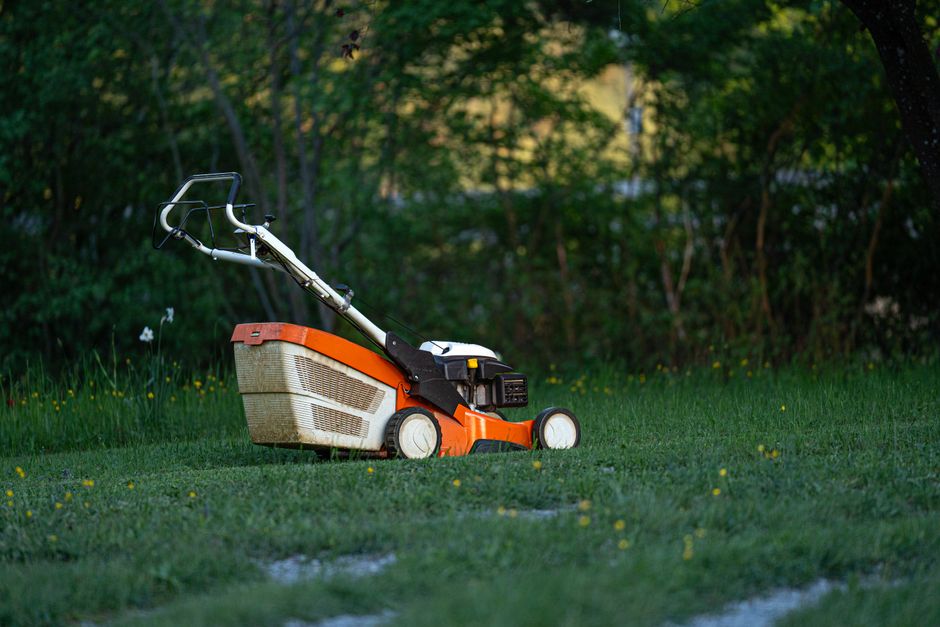
The best large yard mowing solutions depend on how much is smooth lawn, how much is rough growth, and how much time you can spend operating and maintaining equipment. For regular, obstacle-heavy lawn, compare a mowing service, zero-turn, lawn tractor, stand-on mower, or robotic mower; for rough acreage, consider a tractor-mounted cutter. Use local service quotes and the full ownership costs—not acreage alone—to decide.
What are the best ways to mow a large yard without spending all weekend on it?
The best ways to mow a large yard without spending all weekend on it are to outsource the work, use a suitably sized riding or stand-on mower, automate suitable lawn zones, or divide the property among different tools. The useful distinction is not simply machine speed: turns, obstacles, rough ground, and setup can make nominal capacity a poor predictor of actual time.
Here are seven options, with the conditions that make each one more or less suitable:
- Mowing service: Suitable when you prefer predictable visits over operating and maintaining equipment. Angi estimates $50–$200 per acre, with condition, access, and obstacles affecting quotes.
- Zero-turn mower: A candidate for broad, relatively smooth lawn with frequent turns around trees or landscaping. Its suitability depends on the terrain and the operator’s storage and upkeep capacity. For selection considerations, see Choose the Right Zero-Turn Mower for Your Yard Size.
- Lawn tractor: A general-purpose riding option to compare where a property needs lawn mowing and the owner has room to store and maintain equipment. The sources provided do not publish a representative price or acreage capacity for lawn tractors.
- Stand-on mower: Another powered mowing option to compare for obstacle-rich lawn. The supplied sources do not publish comparative cost, capacity, or terrain limits for stand-on models, so use model specifications and local quotes rather than assuming they outperform a zero-turn.
- Tractor with finish mower: A possible approach for maintained grass over larger areas, provided the implement matches the tractor and terrain. Penn State Extension notes that wider equipment can increase field capacity, but implement compatibility matters.
- Brush cutter for rough growth: A tool for vegetation that is beyond ordinary lawn mowing. Penn State Extension describes tractor-pulled brush hogs and industrial brush cutters for maintaining herbaceous openings; this is a different job from producing a fine lawn finish.
- Robotic mower: An option for defined lawn zones where the model’s area and slope limits fit. Husqvarna lists one commercial model for about 1 acre (±20%) with virtual work areas and temporary stay-out zones.
Acreage alone is a weak selector. A broad, open lawn and a smaller property broken up by gardens, trees, gates, and slopes can demand very different equipment and labor. Angi specifically identifies slopes, awkward shapes, gardens, playground equipment, and other obstacles as factors that can increase mowing time and price.
For a quick time estimate when comparing tractor-mounted equipment, Penn State Extension gives a field-capacity formula: speed in miles per hour × implement width in feet × field efficiency, divided by 8.25, estimates acres covered per hour. Field efficiency accounts for time lost turning and handling the field; irregular areas reduce it. A theoretical rate therefore needs to be discounted when the layout is complex.
Should I hire a mowing service or buy a mower for a 2- to 5-acre property?
Hire a mowing service when the value of your time, limited storage, or maintenance burden outweighs the convenience of owning equipment; buy when repeated service quotes and your expected use justify the purchase and upkeep. For a 2- to 5-acre property, published service ranges show why a real local quote matters more than a generic per-acre rule.
Angi reports estimated costs of $100–$400 per visit for 2 acres, $150–$600 for 3 acres, and $250–$1,000 for 5 acres. Its reported time estimates are 2–4, 3–6, and 5–10 hours, respectively. These broad ranges reflect differing conditions and access, not a promise that a particular property will fall at the midpoint.
Use a worksheet before deciding. Put the same time period and mowing frequency on both sides so the comparison is fair:
- Service side: Record the quote per visit, visits expected, and any stated extra charge for a first cut, difficult access, or obstacles. Ask what the service includes.
- Ownership side: Record the mower and attachment purchase cost, fuel, maintenance, repairs, and storage costs over the period you intend to keep the machine.
- Time side: Estimate mowing, setup, cleanup, and maintenance hours. Multiply operator hours by the value you assign to that time, even if you are not paying yourself a wage.
- Decision: Compare the totals and the remaining time commitment, then test the result against a second service quote or an alternative equipment configuration.
The sources do not provide a universal mower purchase price, fuel-use figure, or maintenance budget, so filling those cells with generic numbers would create false precision. Get actual equipment and service figures for your area. If buying used is part of the comparison, Find a Dependable Used Lawn Mower Without Overpaying is a relevant next read.
| Option | Who it suits | Published cost or capacity | Key limitation |
|---|---|---|---|
| Mowing service | Owners who prefer outsourced mowing | Angi: $100–$400 per visit for 2 acres; $150–$600 for 3 acres; $250–$1,000 for 5 acres | Quotes vary with location, condition, access, slopes, and obstacles |
| Zero-turn mower | not published | not published | not published |
| Lawn tractor | not published | not published | not published |
| Stand-on mower | not published | not published | not published |
| Tractor with finish mower | Maintained grass where tractor and implement are compatible | Field-capacity formula published; cost not published | Turns reduce efficiency; attachment must match tractor horsepower |
| Brush cutter or brush hog | Rough vegetation and herbaceous openings | not published | not a stated fine-lawn finishing option |
| Robotic mower | Defined lawn zones within model limits | Husqvarna model: about 1 acre (±20%) | Model limits apply; EPOS requires a reference station |
Is a zero-turn mower or lawn tractor better for acreage with trees and uneven ground?
A zero-turn or lawn tractor is better only when its turning ability, terrain suitability, and maintenance demands match the property; the available sources do not establish a universal winner between these mower types. Trees and landscaping increase the importance of maneuvering, while uneven ground and slopes make safe operation and a consistent cut more consequential.
Map the area before choosing: mark trees, garden beds, ditches, slopes, narrow gates, and sections that need a different finish. Measure the narrowest access point and compare it with the machine’s published width, including any discharge chute or attachment. The source set provides a 21.7-inch product width for the cited robotic mower, but it does not provide comparable widths for zero-turns or lawn tractors; check the exact model specifications.
For an uneven property, do not treat slope performance as a minor feature. Penn State Extension explains that a tractor’s stability can decrease on a slope as its center of gravity shifts relative to its stability baseline, and that raised equipment raises the center of gravity and reduces stability. This makes slope, attachment choice, and operating instructions central to a tractor-mounted setup—not details to resolve after purchase.
A mixed-use arrangement can avoid asking one machine to do incompatible jobs. Use a mower suited to regular lawn on the smooth, maintained sections and reserve a tractor-mounted cutter or brush cutter for rough edges or unmanaged areas. That division can reduce the temptation to use a lawn mower where a rough-growth implement is more appropriate, while keeping the finish work separate.
What equipment works best for rough or overgrown acreage?
For rough or overgrown acreage, use equipment intended for heavier vegetation, such as a tractor-pulled brush hog or industrial brush cutter, rather than assuming a lawn mower can safely produce a finished cut in one pass. Penn State Extension describes these tools for maintaining herbaceous openings and notes that hand cutting is possible but labor-intensive.
Begin by identifying obstacles and hazards across the area, including anything hidden by vegetation, before operating equipment. Then plan staged cuts rather than trying to reduce tall growth to lawn height at once. The sources do not prescribe a universal first-cut height, speed, or safety checklist for neglected residential land; follow the equipment manufacturer’s operating guidance and seek a qualified operator when terrain or vegetation exceeds your experience.
Once the rough area is under control, decide whether it should become maintained lawn or remain an opening with a less frequent vegetation-management schedule. Penn State Extension says the herbaceous openings it discusses are generally mowed annually, sometimes every two years depending on the management goal. That schedule concerns those specific wildlife-management openings, not a typical residential lawn.
For lawn sections, University of Minnesota Extension recommends maintaining typical residential Midwest grass at 3 inches or higher and mowing before it reaches 4.5 inches. It advises removing no more than one-third of leaf tissue at each mowing; a severe cut can stress grass and slow recovery. Its guidance also recommends regular mowing, sharp blades, and changing direction to help avoid scalping and soil compaction. Decomposed clippings can contribute the equivalent of one fertilizer application to the lawn each year.
Frequently Asked Questions
How much does it cost to have an acre or several acres mowed?
Angi estimates $50–$200 per acre and reports ranges of $100–$400 per visit for 2 acres, $150–$600 for 3 acres, and $250–$1,000 for 5 acres. These are estimates, not guaranteed quotes; location, lawn condition, access, slopes, and obstacles affect the price.
Can a robotic mower handle a large yard with multiple zones or slopes?
Some models are designed for multiple work areas and steep slopes, but capacity is model-specific. Husqvarna lists its commercial Automower 535 AWD EPOS for about 1 acre (±20%), with a maximum 70% slope inside its installation area; its wire-free EPOS setup requires a reference station.
How often should I mow a large property to keep the grass manageable?
For a typical residential Midwest lawn, University of Minnesota Extension advises maintaining grass at 3 inches or higher and mowing before it reaches 4.5 inches. Remove no more than one-third of the leaf tissue per mowing; rough or naturalized areas may follow a different management schedule.
Sources
- University of Minnesota Extension: Mowing Practices for Healthy Lawns
- Angi: How Much Does Lawn Mowing Cost?
- Penn State Extension: Herbaceous Forest Openings for Wildlife
- Penn State Extension: Tractor Stability and Instability
- Husqvarna: Automower 535 AWD EPOS
- Penn State Extension: Field Capacity and Tractor Implements
Keep reading

Choose the Right Zero-Turn Mower for Your Yard Size
Match zero-turn mower deck size, engine power, features, and safety limits to your residential lawn, terrain, and access points.
Top Electrical Engineering Universities in USA: Which Should You Choose?
Compare leading U.S. electrical engineering universities by program evidence, net cost, and access to practical experience.

How Do You Choose Virtual Events for Companies?
Choose virtual events for companies by matching each format and platform to outcomes, audience size, accessibility, security, and budget.

Is an Inground Backyard Pool Worth the Money?
Use this practical framework to weigh an inground pool's installation, upkeep, safety, insurance, and resale trade-offs.